


_____________
The Himalaya Rally 2028 is an extraordinary adventure to some of the most dramatic and historic mountain regions starting in the vibrant city of New Delhi. This event will traverse Northern India, skirting the Nepalese border while visiting numerous animal reserves in the area, before entering the mystical Kingdom of Bhutan. After spending five exciting days in Buthan, the event will finally head south to finish in the Western Bengal capital of Kolkata some twenty-one days after starting in Delhi. This event will be a balanced blend of competition and unforgettable encounters with ancient cultures, sacred sites, wildlife experiences and legendary mountain roads with both luxurious hotels and authentic lodges on route.
_____________
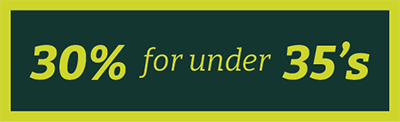
Are you under the age of 35? Are you the driver? Enjoy a 30% discount on the entry fee. Enquire here.
Event Partner

The Route

Event Schedule
Pre-event
The previous Himalayan Challenge Rally, back in 2018, also started from New Delhi; a vibrant starting point for its cultural nuances, the city will allow for easy arrival of both crews and vehicles thanks to its well established international airport and import Customs processes, which will make for a more relaxed start to this incredible adventure. There will be time to enjoy the city and make any final preparations to your car for the start on Sunday morning, 17th September 2028.

Itinerary
After a night luxuriating in the colonial splendour of the start Hotel, our intrepid crews must take the time to prepare themselves – and their vehicle’s horn, for a very different road traffic system. The surprisingly calm, free flowing, straight and flat National Highway is the ideal introduction to the local driving habits, where driving intention and existence is indicated solely by the use of the horn. A silent car is a worry to the locals who will assume the driver is either deaf or lacking a pulse!
Once out of Delhi, crews make their way to the foothills of the Himalayas and into Chandigarh, which takes its name from the Hindu goddess Chandi; by all accounts, quite a feisty deity! Chandigarh was also one of the first planned cities of independent India and was designed in the 1950s by one of the pioneers of modern architecture; Swiss-French architect Le Corbusier.
The route then heads to Shimla taking in the main Sutlej Valley and re-joins the main road to continue along the banks of the Sutlej River before a final ascent and on towards the centre of Shimla and our hotel for the night, which is the magnificent and highest – both in altitude and luxury – hotel in the Himalayas.
A bit early on in the rally schedule, but the first rest day of the event takes place in Shimla to allow crew to recover from the initial experience of Indian driving. There will be the opportunity to explore one of Northern India’s most popular hill stations here in Shimla. Set high up among hills and woods, Shimla was once the summer home of British India, and the uppermost parts of the city reflects this with many buildings decidedly Victorian in design. Snuggled among the colonial architecture are many historic temples and churches and the mix of the two styles is simply fascinating.

Itinerary
There is also the opportunity to visit The Mall, stuffed full of local handicraft shops and The Lakaar Bazaar, which specialises in wooden toys and crafts, both are well worth seeing. The railway enthusiasts might find the 100km narrow-gauge railway of interest; completed and opened in 1903 and now a registered UNESCO World Heritage Site running from Shimla to Kalka.
Hopefully now suitably refreshed and marking a change from the distinctly ‘Alpine’ feel of recent days, day four roads are rural and the route circuitous. We will be heading out of the mountains to the city of Rishikesh on the banks of the Ganges and the origin of Hinduism. There is undoubtedly a certain aura to this city and the evening’s hotel is set right on the riverbank, affording a tranquil setting for any meditational needs.
Rishikesh is the seventh largest city in India and sits in the Himalayan foothills beside the River Ganges; it is better known as the Yoga Capital of the World. This was also where The Beatles attended an advanced transcendental meditation training course at the ashram of Mahareshi Mahesh Yogi in 1968.
Leaving Rishikesh, the event begins to skirt the Nepalese border and head to the Jim Corbet National Park for the first of our lodge stops. The Jim Corbett National Park is located in the Nainital District of the state of Uttarakhand. It was established in 1936 as the country's first National Park and is named in honour of Jim Corbett who had played a leading role in its establishment. It was the first to come under the Project Tiger Initiative and encompasses an area of 521 km2 consisting of hills, riverine belts, marshy depressions, grasslands and a large lake at an elevation range of 400 – 1,220m! Crews will be allowed time for safari trips, there will be the opportunity to see all species of wildlife and hopefully the wonderous sight of tigers in the wild.
We stay with the wildlife theme for the next overnight halt around Palia Kalan where time here will once again allow for further safaris, this time hopefully with Rhinos, tigers and elephants all possible to be seen.
After two nights in lodge accommodation, we head south the city of Lucknow for some luxury and the next rest day with facilities to allow any car (or crew!) issues to be dealt with easily with good amenities and facilities.
Again, refreshed and now over a week into the adventure the event now heads back northeast to move across the northern plains to the city of Gorakhpur on the banks of the Rapti River, then heading into Bengal and our next stop at Darbhanga known as the most important city in the Bihar Region and is referred to as the gateway to Bengal.

Itinerary
Now at day eleven already and back into the wilds of the Gorumara National Park in North West Bengal, located in the Dooars Region of the Himalayan foothills. It is a medium sized park with grasslands and forests and was only established in 1992. It is primarily known for its population of Indian rhinoceros.
Here there are plans for an early morning safari, before making way to the Bhutan border in the afternoon to cross into the mystical country and stopping just over the border in Phuentsholing. Once firmly in Bhutan, the event is heading north to the capital city of Thimpu where the event will be welcomed by the Royal Family itself.
Thimphu is the largest city in Bhutan, situated in the western central part of the country. With its surrounding valley being one of Bhutan's dzongkhags and the Thimphu District. The ancient capital city of Punakha was replaced by Thimphu as the capital in 1955 and in 1961 Thimphu was officially declared the capital of the Kingdom of Bhutan by the 3rd Druk Gyalpo Jigme Dorji Wangchuck.
The city extends in a North-South direction on the west bank of the valley formed by the Wang Chhu, which flows out into India as the Raidāk River. Thimphu is the fifth highest capital in the world by altitude and the highest capital in Asia at around 2, 500m.
Leaving Thimphu, we spend the next three days enjoying short driving sections, visiting some of the most iconic locations the country has to offer. Firstly, the Phobjikha Valley, a vast U-shaped valley in central Bhutan, housing one of the impressive ancient Buddhist monasteries in Bhutan known as Gangteng Monastery of the Nyingma sector.
Then moving onto Punakha which is the administrative centre of Punakha Dzongkhag and as previously mentioned the former capital of Bhutan. Due to its location, it is both quite warm in winter and hot in summer. Located at an elevation of 1,200m above sea level, its main crop is rice. It is the home of the Pungthang Dewachen Phodrang (Palace of Great Happiness) or Punakha Dzong which was created by Tuebi Zaow Balip under the great command of Zhabdrung Ngawang Namgyal in 1637 and believed to have been completed in a two-year time period. Now known as the country's most beautiful Dzong.
The event moves closer to the main Himalayan Range with the next rest day in Paro. A historic town in the Paro Valley, with many sacred sites and historical buildings scattered throughout the area, it is also home to Bhutan's sole International Airport.
The main street in Paro has many examples of traditionally decorated buildings alongside The Dungtse Lhakhang (a 15th-century temple) and the Ugyen Perli Palace where members of the Royal Family lodge in Paro.
About 10 kilometres outside Paro is the famous Paro Taktsang (Tiger's Nest) Buddhist Monastery and Hermitage. Some Bhutanese people believe that Padmasambhava (Guru Rinpoche) flew on the back of a tigress to this location from Tibet. The trek to Tiger's Nest Monastery gives a scenic view of the town of Paro and the surrounding vistas.
After six days of this wonderful and magical kingdom, it will be time to leave and head toward the finish in Kolkata, firstly we once again cross into India and stop near Fulbari just over the border in Bengal near to the Bangladesh border.

Itinerary
The last few days now see the event heading back South with a fascinating drive along ancient trading routes to the evocative ruins of Gour, where history lingers in every wall and courtyard and leaving behind the Himalayan foothills, the lush forests and wildlife near Gorumara National Park but each bend reveals new discoveries and moments to share together.
The last two nights on the road are at Malda, also known as the English Bazar, the sixth largest city in the Indian State of West Bengal. The city is located on the banks of the Mahananda River. Malda was previously an undeveloped city which was enlarging from 1925 to 1930 and continues growing rapidly nowadays with its population inching towards half a million.
The nickname English Bazar was applied in the 17th Century due to the surroundings of the English factory. It was named in accordance with the factories built on the banks of River Mahananda by the British and it is where the English traders set their factories here for the high profitable trade.
A further day heading South and the final night on the road at Krishnanagar which was established in 1864 and is one of the oldest municipalities in Bengal. It is claimed to be named after Krishna Chandra Roy (1728–1782) Previously, the city (village) was called 'Reui' the Rajbari built here during Roy's reign is a prominent tourist attraction though the remnants of past glory have been eroded and only a dilapidated structure of the exquisite places with carvings on inner walls remain today.
All in a flash the past 21 days are over and the finish line is now in sight! A short hop to Kolkata, a city alive with energy, colour, and intoxicating aromas that awaken every sense. Our adventure ends with a sumptuous Prize-Giving Gala Dinner, with exquisite Bengali cuisine that will leave you with memories of the journey you have enjoyed.
Finishing here will hopefully offer you the opportunity to stay on in the city before heading home, to take in the iconic landmarks such as the majestic Victoria Memorial, the artisan quarter of Kumartuli or the vibrant Mullick Ghat Flower Market, each offering a glimpse into India’s rich heritage.

Event Partner

Vehicle Information
A - Pioneer - up to Dec 1920
B - Vintage - Jan 1921 to Dec 1930
C - Vintageant - Jan 1931 to Dec 1947
D - Classic - Jan 1948 to Dec 1985
E - Special - any car not eligible in its normal age Category due to non-period modifications or a later build date at the invitation of the organisers these vehicles will not be eligible overall or category awards only class awards.
F – Classic 4 x4 – any vehicle up to Dec 1985 at the invitation of the organisers, these vehicles will not be eligible overall or category awards only class awards.
What is Included in the Entry Fee?
The entry fee for a crew of two includes:
-
- 3 nights pre-event accommodation in Delhi
- Welcome Dinner in Delhi
- On-event accommodation in a twin/double room including breakfast
- Group evening dining except on rest days*
- Occasional on-rally lunches
- Emergency breakdown assistance
- Parking arrangements
- Experienced Medical support
- Car preparation and navigational guides
- Tulip style Route Books and Map Book for the entire route
- GPS waypoint coordinates and routes on SD memory card
- Metal rally plates, competition numbers, decals for the vehicle
- Identity tags for each participant
- Finishers awards
- Trophies for Overall, Category and Class winners
- Two tickets for the Prize-Giving Gala Dinner
- Post event, detailed results book
- Travel and medical insurance
*Disclaimer: On select evenings where dining options may not meet expected standards, registrants may receive recommendations for alternative restaurants or venues in the surrounding area. These suggestions are provided solely for convenience and enjoyment; however, we do not endorse or have affiliations with any specific establishments.
Entry List
| Driver | Navigator | Year | Vehicle | CC |
|---|---|---|---|---|
| Alan J Brown (IE) | Suzy Black | 1969 | Mercedes 300SEL | 6329 |
| Ales Koci | TBC | 1972 | BMW 3.0 CS | 3500 |
| Alfie Cheyne (GB) | Valerie Cheyne (GB) | 1929 | Bentley Speed Six | 6500 cc |
| Arthur Manners (GB) | TBC | 1933 | Lagonda M45 | 4500 |
| Bob Harrod | Dana Hradecká | TBC | TBC | TBC |
| Carl-Peter Forster (DE) | TBC | 1939 | Chevrolet Coupé | 3500 |
| Charles Bishop (GB) | Rosalind Bishop | TBC | TBC | TBC |
| Chris Bingham (IM) | Heidi Bingham | TBC | TBC | TBC |
| Cole Bradburn (US) | TBC | TBC | TBC | TBC |
| Cole Bradburn (US) | Emilee Bradburn (GB) | TBC | TBC | TBC |
| Coos Ziermans (NL) | Boris Ziermans (NL) | TBC | TBC | TBC |
| Dermot Hanafin (IE) | TBC | 1948 | Bentley Speed 6 | 4257 |
| Guy Dubois (BE) | TBC | TBC | TBC | TBC |
| Harry Turner (GB) | Jonathan Turner (GB) | TBC | TBC | TBC |
| Hubertus Langen (DE) | Silvia Langen (DE) | 1965 | Jaguar Mk2 | 3800 |
| Ivan Pusnik (SI) | Tisa Pusnik (SI) | TBC | TBC | TBC |
| Karl Norrena (CA) | Leanne Norrena (CA) | 1967 | Volvo Amazon 123GT | 1800 |
| Martin Dippie (NZ) | TBC | 1973 | Porsche 911 | 2994 |
| Michael Haentjes (DE) | TBC | TBC | TBC | TBC |
| Momo Forster (DE) | TBC | TBC | TBC | TBC |
| Nick Sleep (GB) | Serita Sleep (GB) | 1964 | Mercedes-Benz 230SL Pagoda | 2778 |
| Patrick Burke (GB) | TBC | TBC | TBC | TBC |
| Patrick Watts (GB) | Pam Watts (GB) | TBC | TBC | TBC |
| Peter Berveling (NL) | Marcel Damen (NL) | TBC | TBC | TBC |
| Pranay Khimji (OM) | Nailesh Khimji (OM) | TBC | TBC | TBC |
| Richard Clark (GB) | Jonathan Round (GB) | 1940 | Ford V8 Coupe | 4800 |
| Stephen Wright (GB) | Jane Evans (GB) | TBC | TBC | TBC |
| Tomas de Vargas Machuca (GB) | TBC | TBC | TBC | TBC |